If you've lived in Winston-Salem through a spring, you know the look: a fine yellow-green film on every car, porch, and patio within a day of washing. Pine and hardwood pollen is part of life in the Piedmont. It's mostly an annoyance, but how you deal with it can make a difference to your paint and your interior.
Can pollen hurt your paint?
Pollen by itself is a fine dust, so a light coating isn't going to ruin your car overnight. The trouble comes from a few things that happen alongside it:
- Moisture. Morning dew and spring showers turn pollen into a sticky paste that clings to paint and can leave spots as it dries.
- Heat. Warm afternoons bake that residue onto the surface, making it harder to remove.
- Dry wiping. Pollen grains are gritty. Wiping them off with a dry towel or your sleeve drags grit across the clear coat and can cause fine scratches and swirls.
- Sap and droppings. Spring is also when tree sap and bird droppings show up more often, and those can etch paint if they sit.
How to wash pollen off safely
- Rinse first. A thorough rinse with plain water removes most of the loose pollen before anything touches the paint.
- Use a proper car shampoo. Skip dish soap, which can strip protection.
- Two buckets. One for soapy water, one for rinsing your mitt, so grit doesn't go back onto the paint.
- Work top down. Roof, glass, hood, then sides; lower panels last since they're dirtiest.
- Dry with clean microfiber. Don't let it air-dry in the sun, which leaves water spots.
Avoid the urge to dust it off dry, and go easy on automatic brush washes, which can be rough on paint. Our article on detailing mistakes that ruin your paint has more on this.
Don't forget the glass, jambs, and cowl
Pollen collects in the places most people miss: door jambs, the area below the windshield (the cowl), around the sunroof, and in the seals. It also builds a haze on the inside of the windshield. A spring detail that hits these spots makes a real difference to how clean the vehicle feels.
Pollen inside the car
Every time a door opens, pollen gets in. It settles on the dash, vents, carpet, and seats, and it's tracked in on shoes. For anyone with seasonal allergies, a cabin full of pollen is no fun. An interior detail removes the dust from surfaces, vents, and fabric. It's also a good time to check your cabin air filter — your owner's manual will tell you how often it should be replaced.
How protection makes spring easier
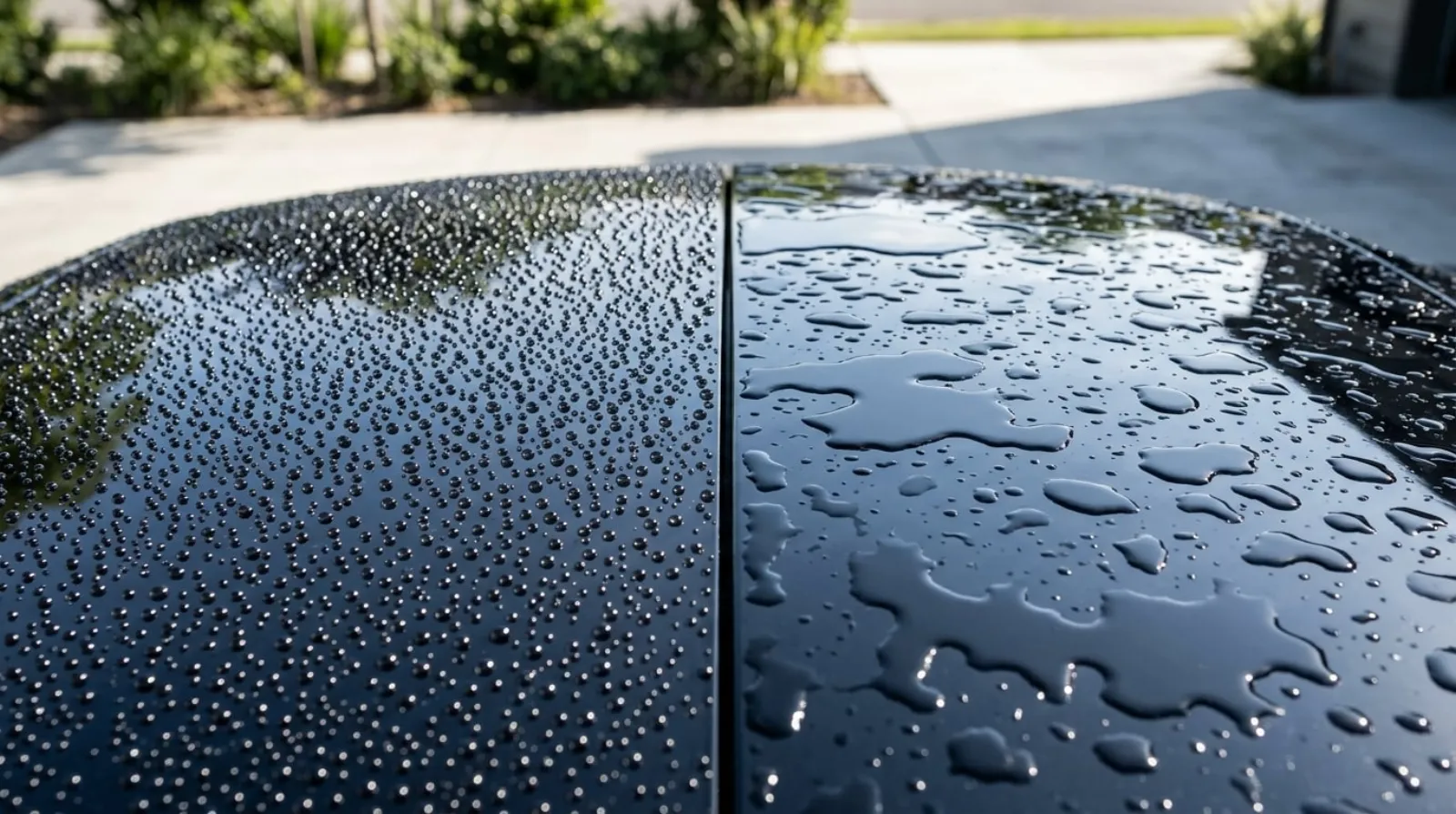
This is where paint protection earns its keep. A slick sealant or coating gives pollen, sap, and grime less to grab onto, so it rinses off more easily and you spend less time scrubbing.
- Clay & Seal (starting at $199) decontaminates the paint and adds a ceramic sealant that lasts months — a good pre-season or post-season refresh.
- Ceramic coating (starting at $800) adds longer-term protection that lasts years with proper care.
Neither makes paint scratch-proof, and you'll still need to wash the car — but cleanup gets a lot easier. See ceramic coating vs. ceramic sealant to decide which fits.
A simple spring plan
- Early spring: Protect the paint before the heaviest pollen arrives.
- During peak pollen: Rinse and wash gently every week or two instead of letting layers build up.
- After the season: Book a full detail to clear out the jambs, vents, and carpet, and refresh protection before summer heat sets in. Our tips on protecting your interior from NC summer heat pick up from there.
Book a spring detail
We bring the detail to your driveway or workplace across Winston-Salem, Clemmons, King, Pfafftown, and nearby communities. Request a quick quote or call or text (336) 488-7225, and we'll recommend the right service for your vehicle.