Look at a parking lot and you'll spot them right away: headlights that have gone yellow, foggy, or chalky. It's one of the quickest ways a car starts to look older than it is — and it can affect how well your headlights light the road. Here's what causes it and what restoration can (and can't) do.
What causes the haze
Most modern headlight lenses are made of polycarbonate plastic, not glass. Polycarbonate is tough and lightweight, but it breaks down under ultraviolet light. To slow that down, manufacturers apply a clear protective layer at the factory.
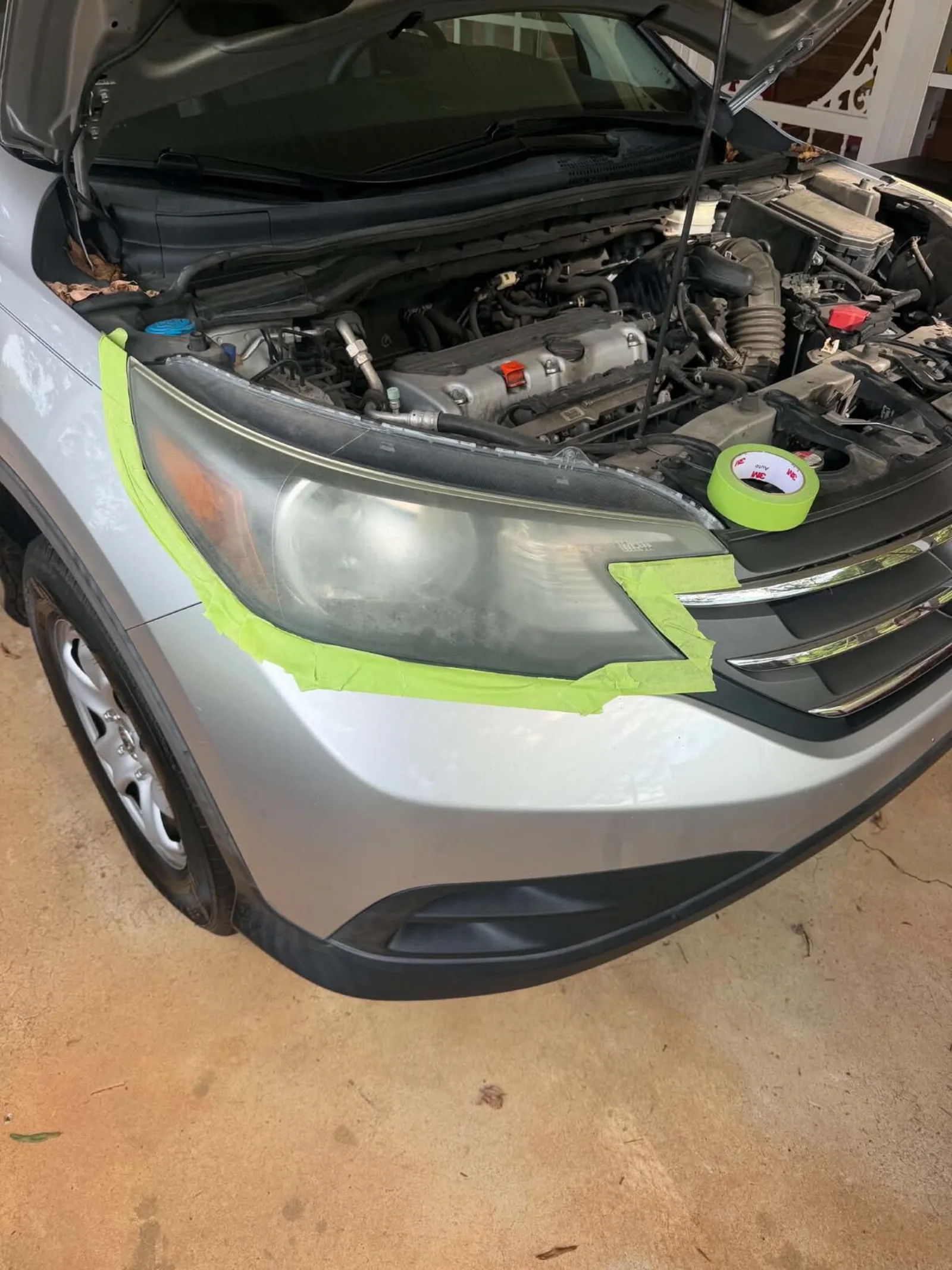
Over years of sun, heat, road grime, and harsh car-wash chemicals, that layer wears away. Once it's gone, the plastic itself starts to oxidize. The result is the yellow tint and cloudy, rough surface you see on so many vehicles. Cars that park outside all day — which is a lot of cars in North Carolina — tend to show it sooner.
Is it just cosmetic?
Not entirely. That cloudy layer scatters and blocks some of the light your bulbs put out. Clearing it away lets more light through the lens, which can help improve nighttime visibility. How much depends on the age and condition of the lens, so we'll always give you an honest assessment of what to expect before we start.
Why the toothpaste trick doesn't last
You've probably seen the online hacks — toothpaste, bug spray, baking soda. Some of them can make a lens look a little clearer for a short while because they're mildly abrasive. The problem is that they don't remove the oxidation evenly, and they leave the bare plastic with no protection at all. The haze tends to come back quickly, sometimes worse than before.
What professional headlight restoration involves
A proper restoration works in stages:
- Clean and mask. The lens is cleaned and the surrounding paint and trim are taped off to protect them.
- Sand away the oxidation. The damaged surface layer is carefully removed, moving through progressively finer steps.
- Polish. Polishing brings back clarity and removes the sanding marks.
- Seal. A protective sealant goes on to help the results last longer.
That last step is what separates restoration from a quick fix. Without protection, freshly polished plastic starts oxidizing again right away.
You can see a real example in our Honda CR-V headlight restoration project, including before and after photos.
How long do results last?
No restoration is permanent. Headlights live outside, so some haze can gradually return over time. The sealant helps slow that down, and parking in shade or a garage helps too. When the lenses start to dull again, the service can be repeated.
When restoration isn't the answer
Restoration works on the outside surface of the lens. It won't fix:
- Moisture or condensation inside the headlight housing
- Cracks or chips in the lens
- Burned-out bulbs or electrical problems
- Damage on the inside of the lens
If we see any of these, we'll tell you before doing the work.
What it costs
Our headlight restoration starts at $60. The final price depends on the condition of the lenses and the vehicle, and we confirm it before starting. Most vehicles take about an hour. It also pairs well with a full detail — clear headlights finish off a freshly cleaned car. Learn more on our headlight restoration page.
Get a quick quote
Snap a photo of your headlights and send it through our Quick Quote form, or text (336) 488-7225. We'll let you know what to expect and come to your home or workplace anywhere in the Winston-Salem area.