If your paint feels rough even after a wash, that’s not your imagination. Road film, brake dust, tree sap mist, rail dust, and overspray can get baked into the clear coat. A clay bar treatment pulls that junk out so the paint feels smooth again and your protection actually sticks.
At Romeo’s Detailing, we do this kind of paint decontamination all the time for drivers in Winston-Salem, Clemmons, and King. It’s one of those steps people skip until they see the difference with their own hands.
What a clay bar treatment actually does
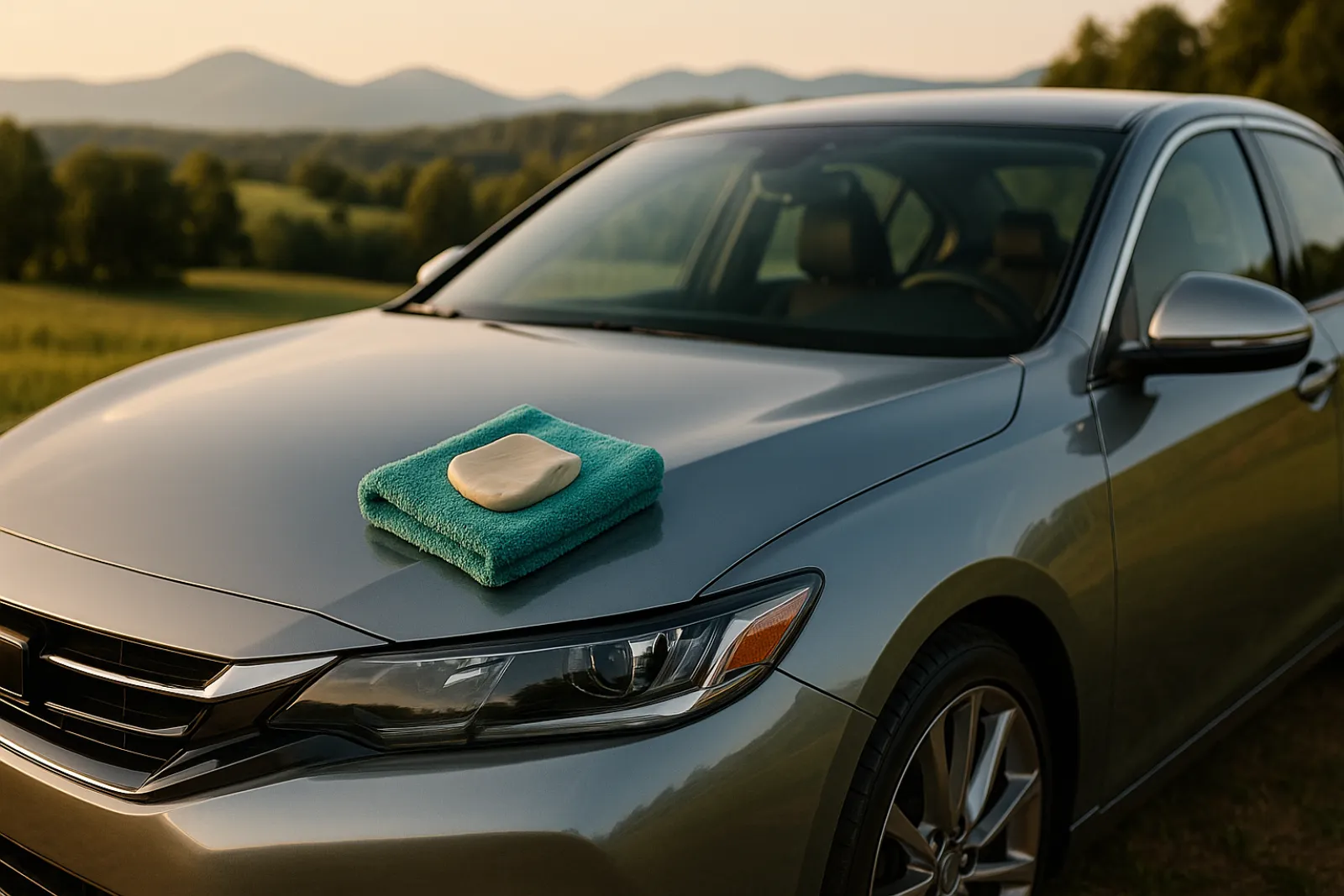
A clay bar is a soft detailing tool that grabs contaminants sitting on top of the clear coat. It does not “wash” the car in the normal sense. It removes the stubborn stuff a shampoo can’t touch.
Think of it like sanding by hand, but much safer and much finer. Used the right way with plenty of lubricant, the clay glides across the paint and lifts bonded contamination out of the finish.
That contamination usually comes from:
- Brake dust and industrial fallout
- Road grime and tar mist
- Tree sap specks
- Paint overspray
- Hard water spots with mineral buildup
- Rail dust on daily drivers parked near busy roads or shops
Once that junk is removed, the surface feels slick again. More importantly, your wax, sealant, or ceramic-style protection can bond properly.
Why your car needs paint decontamination
A lot of folks think a good wash is enough. For a lightly used vehicle, maybe it is for a while. But if you drive your car through Winston-Salem traffic, park under trees in Pfafftown, or commute around Lewisville and Clemmons, contaminants build up fast.
Here’s why paint decontamination matters:
1. Better protection adhesion
If you apply wax or sealant over a dirty, contaminated surface, you’re trapping junk under the protection. That means weaker bonding and shorter lifespan.
2. Better gloss and clarity
Contaminants dull the finish. After clay bar treatment, paint reflects light cleaner and looks deeper. Black paint especially shows this right away.
3. Less drag on the surface
Rough paint collects more grime and feels harder to keep clean. Smooth paint rinses easier and usually stays cleaner longer.
4. Safer prep for polishing
If you’re planning to polish out swirls or scratches, claying first is the smart move. It cuts down the chance of dragging bonded crud around with a machine or pad.
How to know your car needs a clay bar treatment
You don’t need a lab test. Run your hand over the paint after a wash and dry.
If it feels gritty, sticky, or rough, the surface is contaminated.
Other signs:
- Water no longer sheets or beads the way it used to
- The paint looks clean but still feels dirty
- You see tiny specks that won’t wash off
- Wax isn’t lasting very long
- The finish looks dull even after a detail
Cars in Rural Hall and Bermuda Run that spend a lot of time outdoors usually need decontamination more often than garage-kept vehicles. Same goes for work trucks, highway commuters, and family SUVs that see year-round use.
Clay bar treatment vs. washing vs. polishing
This part matters, because a lot of people mix these up.
Washing
A wash removes loose dirt: dust, mud, pollen, bird droppings, and everyday grime. It’s the first step, not the whole job.
Clay bar treatment
Clay removes bonded contamination that washing leaves behind. It’s a surface correction step, not a cosmetic fix for scratches.
Polishing
Polishing removes defects in the clear coat such as swirls, haze, and light scratches. It can improve gloss a lot, but it’s not the same thing as decontamination.
If you skip clay and go straight to polish, you can end up grinding contaminants into the paint. That’s one of the most common mistakes we see.
What happens during a professional clay bar treatment
A proper clay treatment is more than rubbing a bar over the car and hoping for the best.
At Romeo’s Detailing, the process usually goes like this:
1. Thorough wash
We start with a proper wash to remove loose debris. You never want to clay over grit sitting on top of the paint.
2. Decontamination check
We inspect the surface by hand and by eye. Wheels, lower panels, hood, roof, and rear bumper usually tell the story fast.
3. Clay and lubricant
We use a safe detailing lubricant so the clay can glide. That keeps friction down and helps avoid marring.
4. Wipe and inspect
After claying a section, we wipe it clean and check the finish. If needed, we repeat until the paint feels smooth.
5. Protection
This is where a service like Clay & Seal makes sense. Once the paint is decontaminated, we lock in that clean finish with a sealant.
If the goal is long-lasting protection and a slick finish, claying without sealing is only half the job.
Why Clay & Seal is a strong value
A standalone clay bar treatment improves the surface, but protection is what keeps the finish looking good after we leave.
That’s why our Clay & Seal package is a smart pick for a lot of vehicles. For $199, you get about 3 hours of work focused on paint decontamination and sealing the finish afterward. That’s a strong move for daily drivers, used cars, and vehicles that are about to be traded in or sold.
If your paint is already in decent shape and you just want it clean, smooth, and protected, Clay & Seal is one of the best bang-for-the-buck services we offer.
Common mistakes people make with clay bars
A clay bar is useful, but it can also cause problems if used wrong.
Using it on a dirty car
If the car isn’t washed first, the clay can drag loose dirt across the finish and leave scratches.
Dropping the clay
If a clay bar hits the ground, throw it out. Once it picks up grit, it can turn into a scratch machine.
Skipping lubricant
Dry claying is asking for trouble. You need slip so the clay can do its job without grinding into the paint.
Using too much pressure
You’re not scrubbing a grill. Light pressure is enough.
Claying too often
More is not always better. Most cars do not need clay every month. Do it when the surface needs it, not just because you saw a video online.
How often should you clay your car?
There’s no one-size-fits-all answer. It depends on where you drive, where you park, and how picky you are about the finish.
A good rule of thumb:
- Daily drivers: every 6 to 12 months
- Garage-kept cars: maybe once a year or as needed
- Cars parked outside or driven a lot: possibly more often
- Vehicles exposed to overspray, sap, or heavy fallout: as needed
If you’re around construction zones, tree-lined streets, or heavy traffic in Winston-Salem, you may notice contamination build faster than someone driving a weekend car in Vienna.
What clay bar treatment does not fix
This is important so expectations stay real.
Clay bar treatment does not:
- Remove deep scratches
- Fix oxidation by itself
- Replace paint correction
- Repair clear coat failure
- Remove all stains from fabric or plastic
It is a prep and refinement step. It makes the surface clean and ready. If your paint is heavily swirled or dull, you may need polishing in addition to clay decontamination.
Who benefits most from clay decontamination?
Pretty much any vehicle can benefit, but some vehicles need it more than others.
Newer vehicles
Even new cars can arrive with rail dust, transport fallout, or dealer lot contamination.
Black and dark-colored cars
These show rough texture, water spots, and dullness faster than lighter colors.
Work trucks and SUVs
If you use your vehicle hard, it picks up road grime and industrial fallout quicker.
Vehicles being sold or traded
A smooth, glossy finish helps a vehicle present better. It’s one of those little things buyers notice right away.
Cars getting sealant, wax, or ceramic prep
Any time we’re protecting paint, decontamination should happen first.
Where clay bar treatment fits into a full detail
Clay treatment isn’t just a standalone add-on. It’s a key step in a real exterior detail.
A full service like The Works can include deeper cleaning, paint prep, and protection for owners who want the whole vehicle brought back properly. For some cars, a clay treatment plus sealant is enough. For others, the finish needs more attention before the paint can really pop.
If you’re not sure what your vehicle needs, that’s where a quick conversation helps. We’d rather point you to the right service than sell you something you don’t need.
Why mobile clay bar service makes sense
Dragging your car across town for a basic prep service isn’t always worth the time. We’re a mobile detailing company, so we come to you in Winston-Salem, Clemmons, King, Pfafftown, Lewisville, Rural Hall, Bermuda Run, and Vienna.
That means less hassle, no waiting room, and no sitting in line at a wash bay trying to guess what your paint actually needs.
If you want to see the kind of finish we’re after, take a look at Our Work Gallery. Real cars, real results, no fluff.
Final word: smooth paint is protected paint
A clay bar treatment is one of the most useful steps in auto detailing because it solves a problem most people can feel but can’t always see. It strips bonded grime off the clear coat, makes the paint smooth again, and sets the stage for real protection.
If your car feels rough after washing, if wax isn’t holding up, or if you want a cleaner finish before sealant goes on, paint decontamination is the move.
At Romeo’s Detailing, we handle clay bar treatment the right way and pair it with protection when it makes sense. If your vehicle is in the Winston-Salem area and needs a proper Clay & Seal service, Book Now or reach out through Contact Us. We’ll get it handled without the runaround.